
Trees, King, Roots, ICE, and White Roses
by Rabbi Nate DeGroot
Today, Rosh Hodesh Shvat - the first day of the new Jewish month of Shvat - is also Martin Luther King Jr. Day. Most famously, Shvat is known for its 15th day, which begins the evening of February 1st and is known as Tu B’Shvat, the Jewish birthday for the trees. To me, this connection feels fitting: Dr. King himself was a proud, sturdy, distinguished tree of a man.
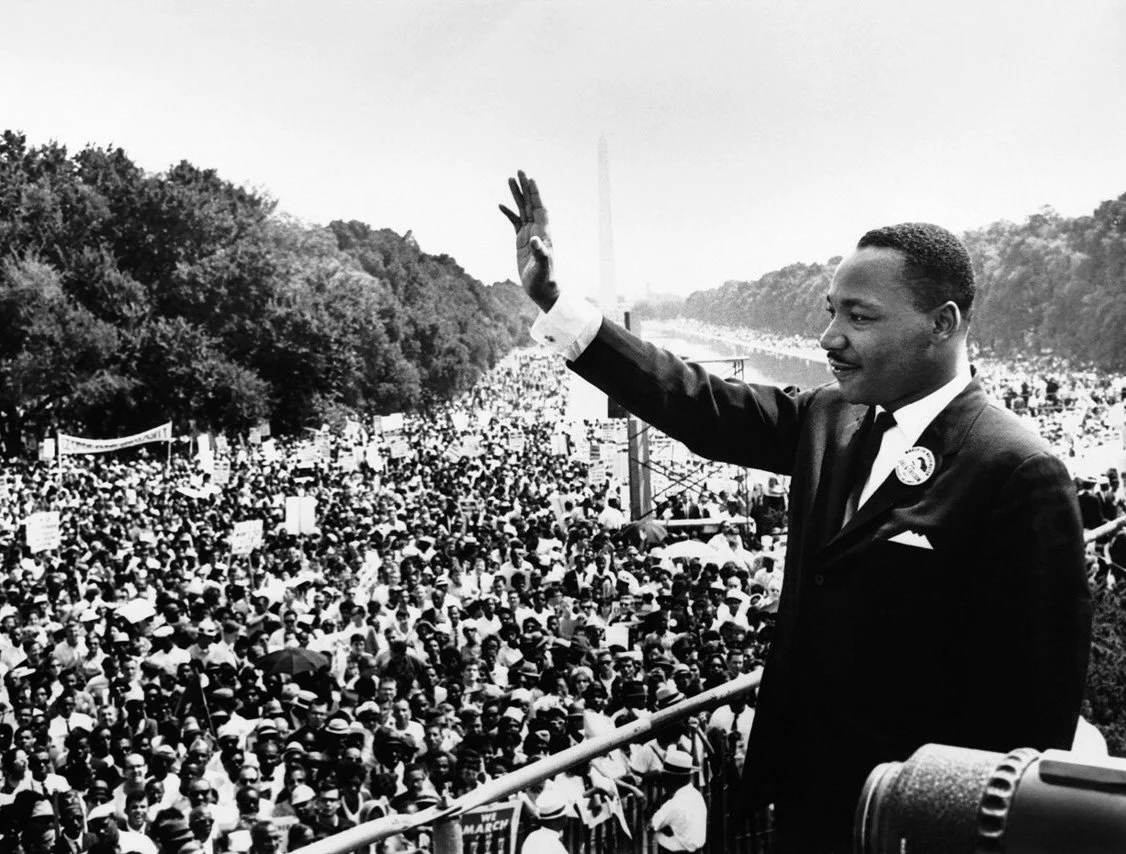
Dr. Martin Luther King Jr., Department of Defense Public Affairs Office photo
In a forest of activists and public figures, King’s was the face of the 1960s Civil Rights Movement, his branches sprawling above the rest. After all, there is a federal holiday named after him. Do we shut down post offices and schools every year to honor any other Civil Rights heroes?
No doubt Dr. King deserves the praise he received in his life and posthumously. But it would be a mistake to believe that any one tree makes a forest, or that any one person makes a movement. A forest is comprised of infinite cells and diverse species, each uniquely playing their role, collaboratively connected to one another.
As we well know, but sometimes might forget, King would not have been able to travel the country to march with oppressed workers or sit at segregated lunch counters without the support of his family. And the movement he became the face of wouldn’t have been possible without the myriad individuals, organizations, ideas, town halls, trainings, church meetings, phone calls, and more happening side by side, beneath the surface, and behind the scenes.
Yes, there’s a day on our federal calendar reserved for one person, but anyone who knows anything about trees knows that without a strong root system to support it, a tree can’t survive on its own.
This is, in part, on my mind because just a few days ago, Claudette Colvin passed. How many of you knew who Claudette Colvin was before she passed? How many of you learned who she was when she passed? How many of you still don’t know who she is? I confess I only learned about her this past August.
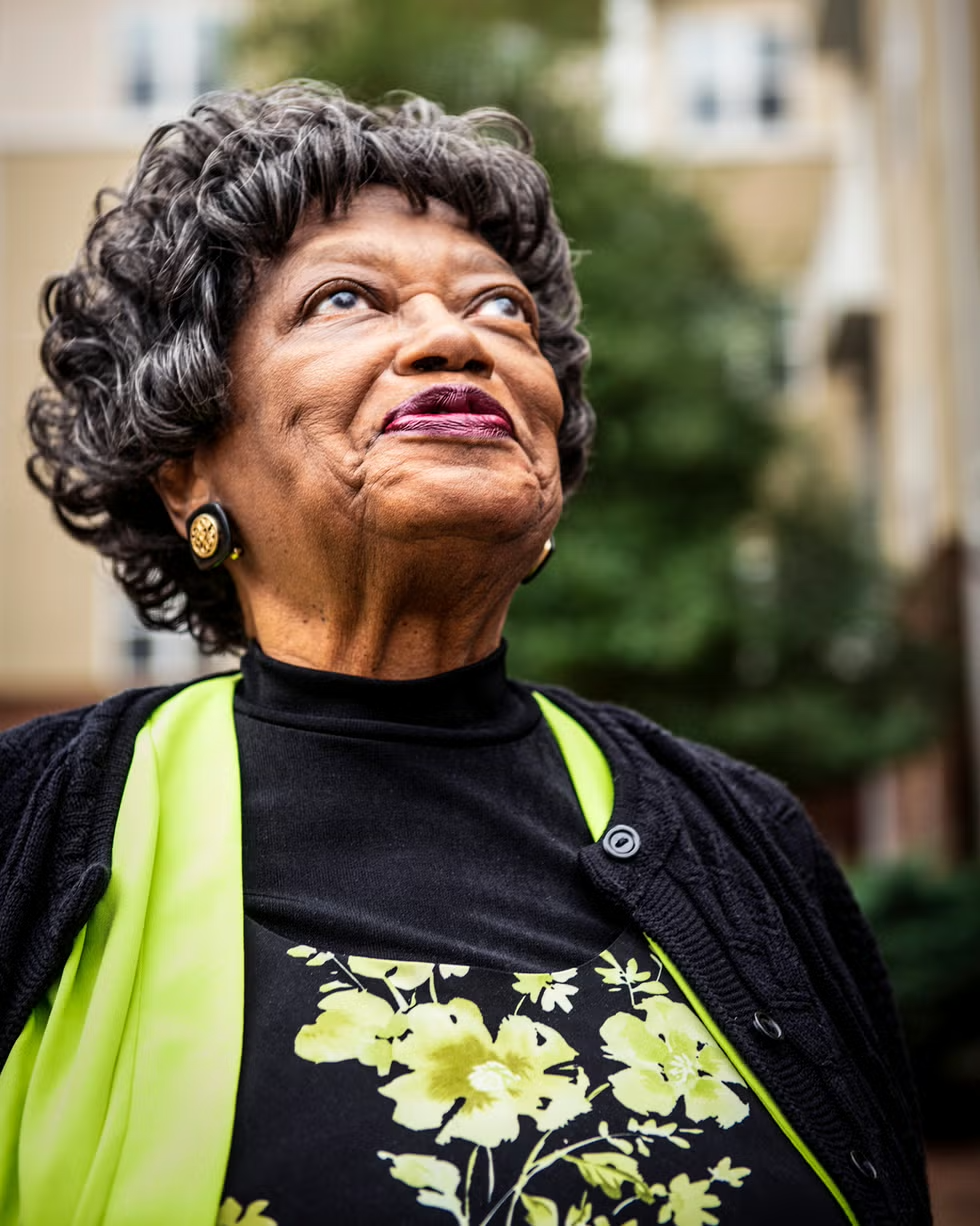
Claudette Colvin, photo by Andi Rice
Claudette Colvin was arrested in 1955 for refusing to give up her seat on a segregated Montgomery, Alabama, bus, months before Rosa Parks gained international fame for refusing to give up her seat. Colvin’s act helped form the basis for the federal lawsuit that outlawed racial segregation in US public transportation and helped to spark the modern Civil Rights Movement.
In her own words, Colvin recalled that she had been studying anti-slavery abolitionist heroes in school, and when she refused to give up her seat, felt that she had Harriet Tubman on one shoulder, Sojourner Truth on the other, and “history had me glued to the seat.” However, because Colvin was fifteen, poor, darker skinned, and she was arrested while kicking and scratching, movement organizers thought she did not present as dignified and sympathetic a figure to rally around as the older, less poor, lighter-skinned, Parks. Once the community decided to rally around Parks and King joined the bus boycott, that’s when he was really thrust onto the national scene.
Now, we don’t have Rosa Parks Day. We certainly don’t have Claudette Colvin Day. And we most certainly don’t have a day for the hundreds and thousands of people who helped plan and organize those initial actions or any of the ones that followed, nor do we have days for any of the people who followed up those actions with lawsuits, rallying in the streets, printing flyers, or doing any of the other critical tasks for a movement that never seem to get the same above-ground recognition.
On this Martin Luther King day, as with Tu B’Shvat, and perhaps at all times, ours is a society that tends to focus more on the majestic tree than the mangled root system, more on the tasty fruit than the damp and musty soil, more on the beautiful leaves than the grubby microbiomes. It’s understandable that we naturally prioritize what’s most visible, most pleasing, that which yields the most immediate benefit, and that which makes the most convenient headline. But when we pause long enough to consider, we assuredly remember that a tree contains within it - and is situated within - ecosystems within ecosystems within ecosystems. It’s not that the tree is not important. But rather, the tree, its ecosystem, and everything contained within are all equally important in their own unique ways.

'Mycelial Threads' by Graeme Walker
Yes, the Torah compares humans to trees. But just as true is King’s assertion that “...all life is inter-related. All [humans] are caught in an inescapable network of mutuality, tied in a single garment of destiny. Whatever affects one directly, affects all indirectly. I can never be what I ought to be until you are what you ought to be, and you can never be what you ought to be until I am what I ought to be. This is the inter-related structure of reality.”
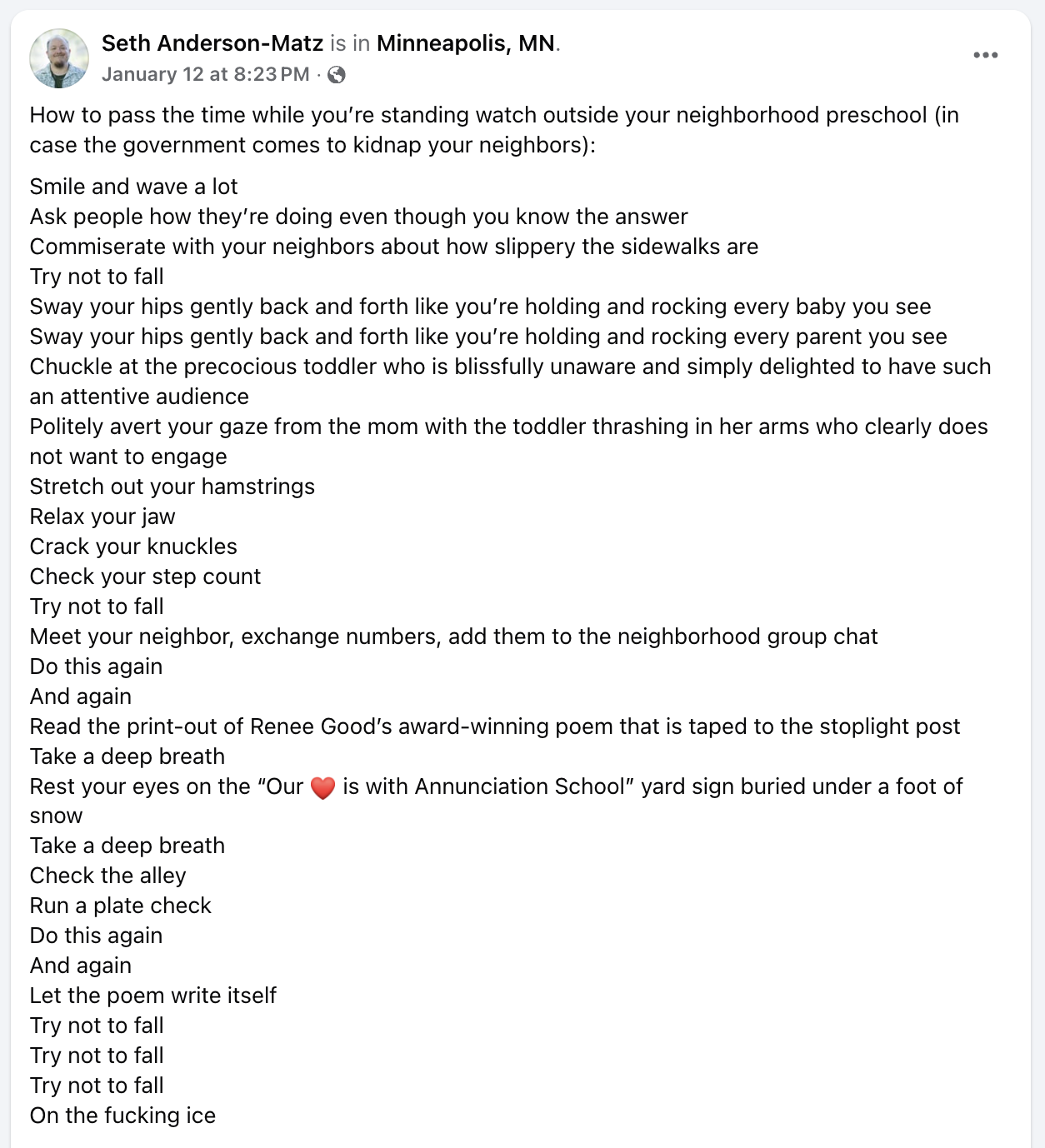
I bring this interconnected ecosystem perspective up in the lead up to Tu B’Shvat as regular people - and thousands of them - are taking to the streets in Minneapolis and beyond every hour of the day and night to protect Democracy and their neighbors. Countless Claudette Colvins, with ancestors on their shoulders, doing the dirty work. Mycelial networks of mutual care and support. Root systems of protection and purpose. Grandparents joining Signal chats. Teachers guarding preschools. Regular people bringing over hot meals to regular people too scared to leave their homes, watching each other’s kids while a family member needs to leave the house, keeping watch on city blocks, passing out whistles, and so much more. It’s these neighbors helping neighbors, showing up day and night, that make movement possible.
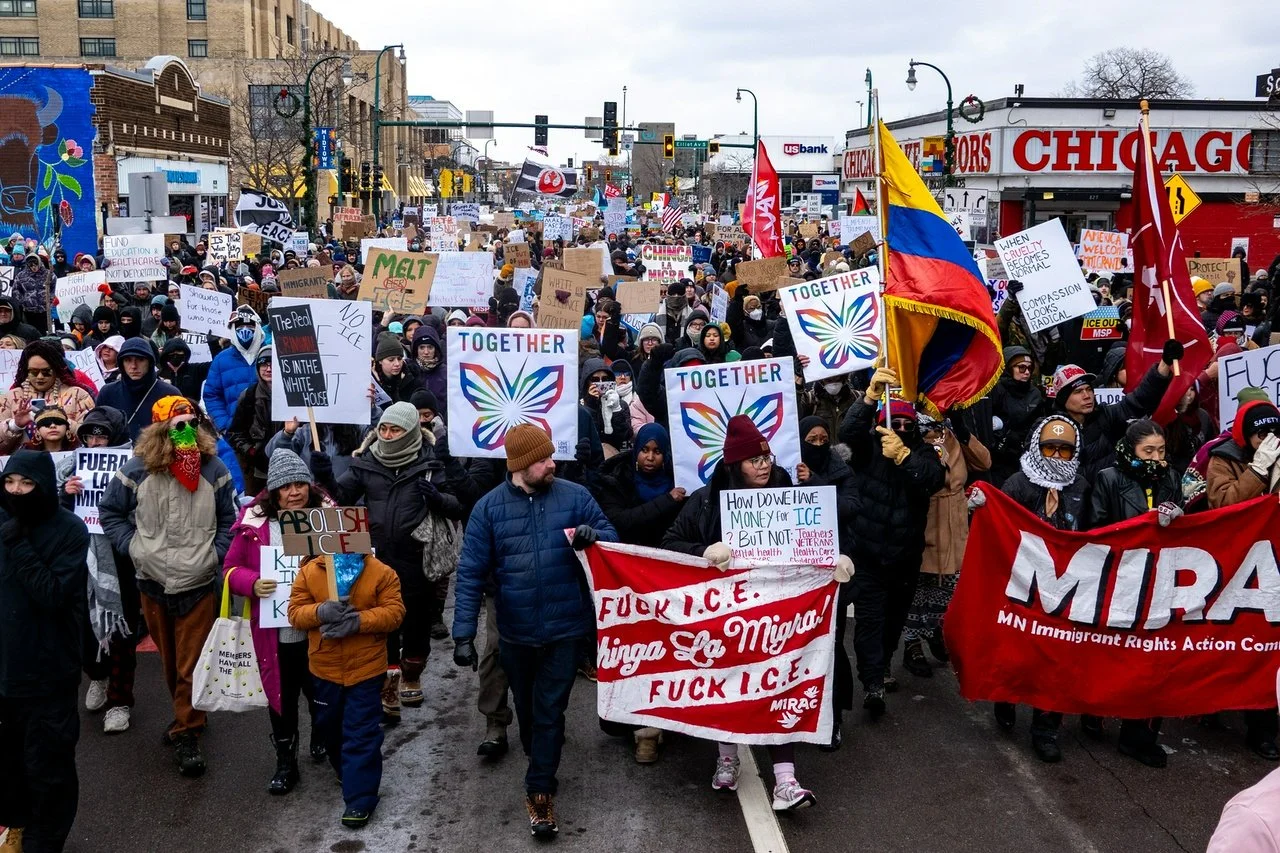
March in Minneapolis protesting the ICE murder of Renee Good, Fight Back! News
As Shalom Center Advisory Council member, Rabbi Danya Ruttenberg, wrote last week on Facebook,
[I’m] feeling so moved by laying my eyes on one of the original flyers of the White Rose Resistance Group.
Beginning in the summer of 1942, they wrote and distributed leaflets calling for the end of the Nazi regime, the protection of Jews and others under attack, broke rules by forging relationships with Russians ("the enemy"). The first four leaflets got out to about 100 people, but by the 5th they figured out how to get around rationing paper and copying and etc. (a massive risk re: alerting suspicion) and managed to print 6000, got them to dissidents in other cities, who then started printing them and they started, in a word, going viral.
It was late, too late, by the time they got started, and the hungry maws of the regime caught and martyred them by the sixth flyer in 1943 (though the Brits had managed to airdrop like five million of that last one over Germany).
But my God, the words from even their first call to action ring so, so true today. May we hear them, and may it not be too late for us yet.
"If everyone waits for their neighbour to take the first step, the messengers of the vengeful nemesis will come ever closer, and the very last victim will senselessly be thrown into the throat of the insatiable demon. Therefore, every individual must be aware of their responsibility and put up as fierce a fight as possible, to work against the scourges, against fascism and any similar system of totalitarianism. Offer resistance – resistance – wherever you may be, stop this... from running on and on, before it is too late... "
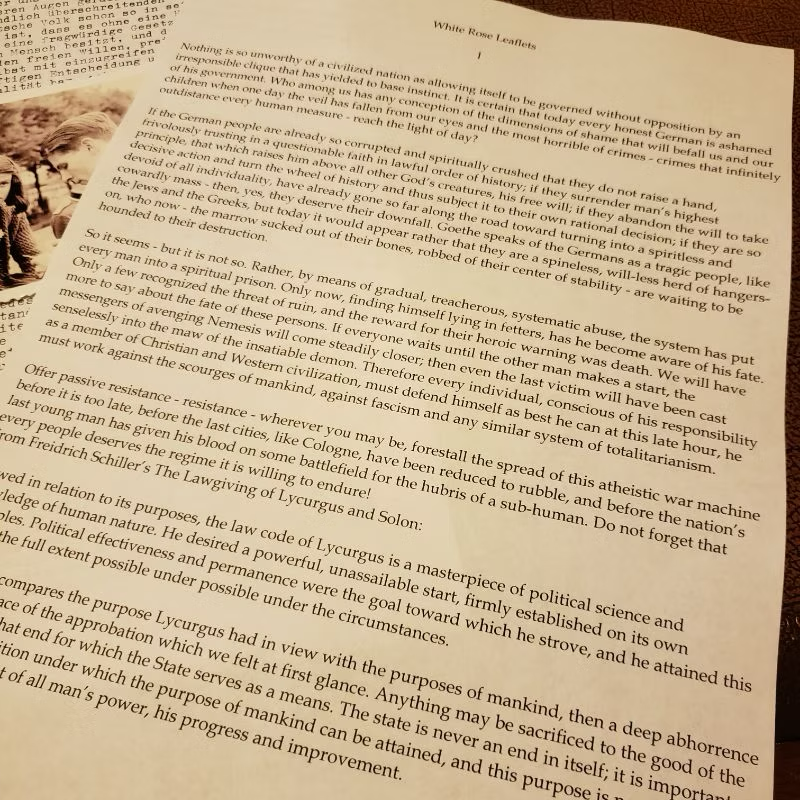
Sophie Scholl - White Rose Leaflet #1
As much as we dream about a leader like King - or, in the case of our Torah, Moses, whose story we’re reading right now in our annual Torah reading cycle, and whose story we’ll recount again at Passover - to capture our attention and take us to the Promised Land, it’s possible that that kind of story and that kind of character are actually from another era. That we’ve moved beyond the charismatic, singular (usually male), figure.
And even if we haven’t, even if a Messianic-type figure rises in the weeks, months, or years ahead to help us travel to our own Promised Land, you can bet that that singular tree will actually be supported by a wide and deep and strong and resilient root system, linked arm in arm, just like King was with his family, and Colvin, and Parks, and thousands more. Just like Moses was with Tzippora, Miriam, Aaron, Yitro, and the Hebrews - not to mention God.
And even more, we know that before King was King and Moses was Moses, they were regular people just like you and me. King became King because he was thrust into the public spotlight when other, more established leaders had too much to lose. He became a leader by becoming a leader. And Moses, a reluctant leader, slow of tongue and speech, who asked God in disbelief, “Who am I that I should go to Pharaoh, that I should bring the Children of Israel out of Egypt?” Moses didn’t start off as Moses. He needed to be convinced to step into leadership in the first place.
Like the White Rose Resistance teaches us, like the root systems teach us, like the people of Minneapolis are teaching us, we can’t control whether or how or when a single leader emerges. What we can control is how we each show up, neighbor to neighbor, door to door, root to root. For, as the American poet, essayist, teacher, and activist June Jordan wrote in 1978, “we are the ones we’ve been waiting for.” And who knows what happens when we show up?
According to Fred Gray, the attorney behind Browder v. Gayle, the federal court case in which Claudette Colvin was a plaintiff, that ruled that segregation on public transportation was unconstitutional, “...Claudette gave all of us the moral courage to do what we did.”
May Claudette and King and Parks and countless paper pushers and meal deliverers and preaching clergy and preschool guarders and public figures and slippery sidewalks give all of us the moral courage to show up for ourselves, our neighbors, and our community in whatever way we’re able to, for the health and well being of the entire forest.
Below, please find a few urgent calls and opportunities for you to support the people of Minneapolis and us all.
With blessings,
-Rabbi Nate
Upcoming Actions
Thursday, January 22
12:30pm ET // 9:30am PT
Call With Us - Hold ICE Accountable!
As Congress debates immigration enforcement funding, ICE continues to terrorize immigrant communities through raids, detention, surveillance, and family separation—creating real physical harm and fear that ripples across the country. This system of enforcement is reinforced by white Christian Nationalist ideology, which frames the United States as a Christian nation and defines who “belongs.” Through religious language, biblical imagery, and “law and order” rhetoric, this ideology justifies cruelty toward immigrants while portraying enforcement agencies like ICE as moral defenders of the nation. The result is a dangerous convergence of religious nationalism, state violence, and dehumanization.
For Jews and other minorities, this should raise urgent alarm. The same worldview that enables ICE to terrorize immigrants undermines genuine religious freedom, erodes pluralism, and promotes a vision of America rooted in exclusion and religious supremacy rather than constitutional democracy.
In this urgent “Call With Us!” action, participants will:
Receive clear, timely context on current congressional efforts to fund or defund ICE.
Examine how white Christian nationalist goals, messaging, and symbolism fuel immigration enforcement and normalize harm.
Understand how ICE’s actions destabilize and terrorize communities—and why this is a religious freedom issue.
Get straightforward talking points grounded in pluralism, dignity, and constitutional values.
Call Members of Congress during the program to demand that they hold ICE accountable and reject policies rooted in fear and exclusion.

Jews for a Secular Democracy, The Shalom Center, and other co-sponsor partners invite you to join in this urgent action this Thursday!
Visit bit.ly/cwunoice for more information or to register or click below:
Thursday and Friday
January 22–23
Minneapolis, MN (in person)
For Clergy: A Call to Witness, Resistance, and Action in Minneapolis
MARCH (Multifaith Antiracism, Change & Healing) is inviting clergy from all over country to go to Minneapolis and witness what is happening on January 22, and to stay for the massive day of action on January 23.
From the MARCH website:
In the targeted violence against immigrant communities from Latine and Somali neighborhoods—where families are being torn apart by masked agents, where communities are organizing, resisting, and protecting one another, and where Renee Good’s life has been taken with reckless disregard for the preciousness of human life—we are witnessing an eruption of corruption, racism, and the worship of money over life itself, now threatening the soul of this nation.
No American is without responsibility for the 600+ and growing number of people kidnapped and missing from our communities, nor for Renee’s murder. All are involved in the sorrow that rises from Minneapolis and contaminates every crevice of our national life.
The people of Minneapolis will continue to struggle for an end to suffering and violence, and to redeem the soul of this nation. But this moment also demands that others come—to witness what is being tested here, to learn from how communities are responding, and to help bear the burden together. What is unfolding in Minneapolis will not stay here.
We therefore call on clergy and faith leaders of all faiths, representative of every part of the country, to join us for a day of witness and resistance—a working convening rooted in accountability to impacted communities and designed to build the relationships, skills, and commitments needed for sustained action across the country.
In this way, all who come will bear witness to the fact that the struggle in Minneapolis is for a new America, a new Beloved Community, and a new democracy everywhere in the world.
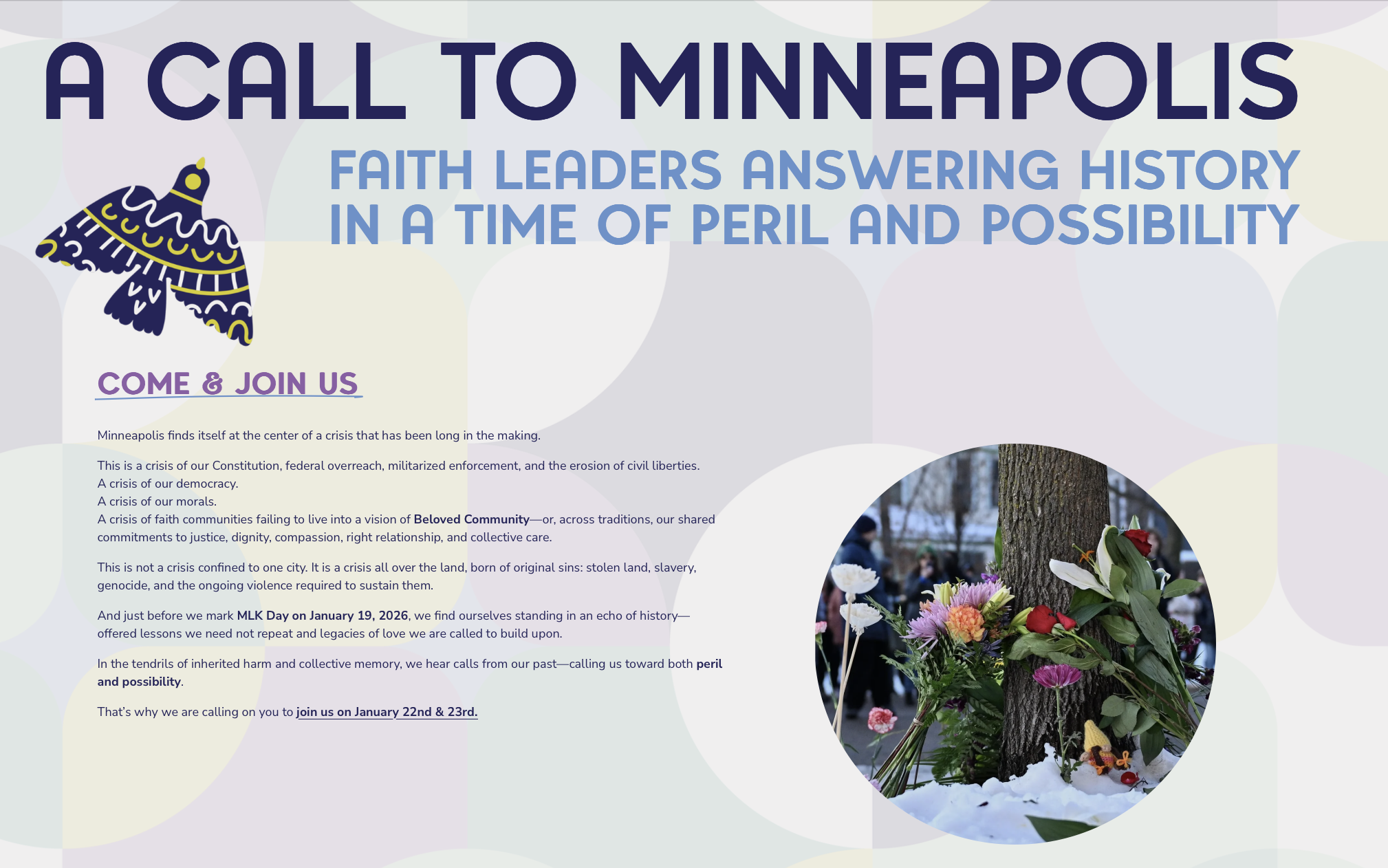
If you are or know clergy who can join this call be in person in Minneapolis, find out more or sign up on the MARCH website at www.marchminnesota.org.
Wednesday, February 11
1:30-2:30pm
ICE Headquarters, Washington, DC (in-person)
Jews Against ICE
The Shalom Center is joining T’ruah, Bend the Arc and other co-sponsor organizations in an event that will bring together over 75 Jewish clergy from across the country, as well as dozens of Jewish communal leaders and community members, to demonstrate that the Jewish communal consensus is clear: we completely reject this immigration system that dehumanizes people. We demand ICE leave our cities.
Grounded in our sacred teachings, we will make the moral case that this system is both a failure of policy and of conscience, and that it does not have to be this way.

The action highlights the leadership of rabbis and cantors in order to show the moral failure of this enforcement system, but we are asking all Jewish community members to show up to reinforce this broad consensus.
Stay informed on the Jews against ICE action via the T'ruah website at truah.org/events/jews-against-ice-action or click the button below: